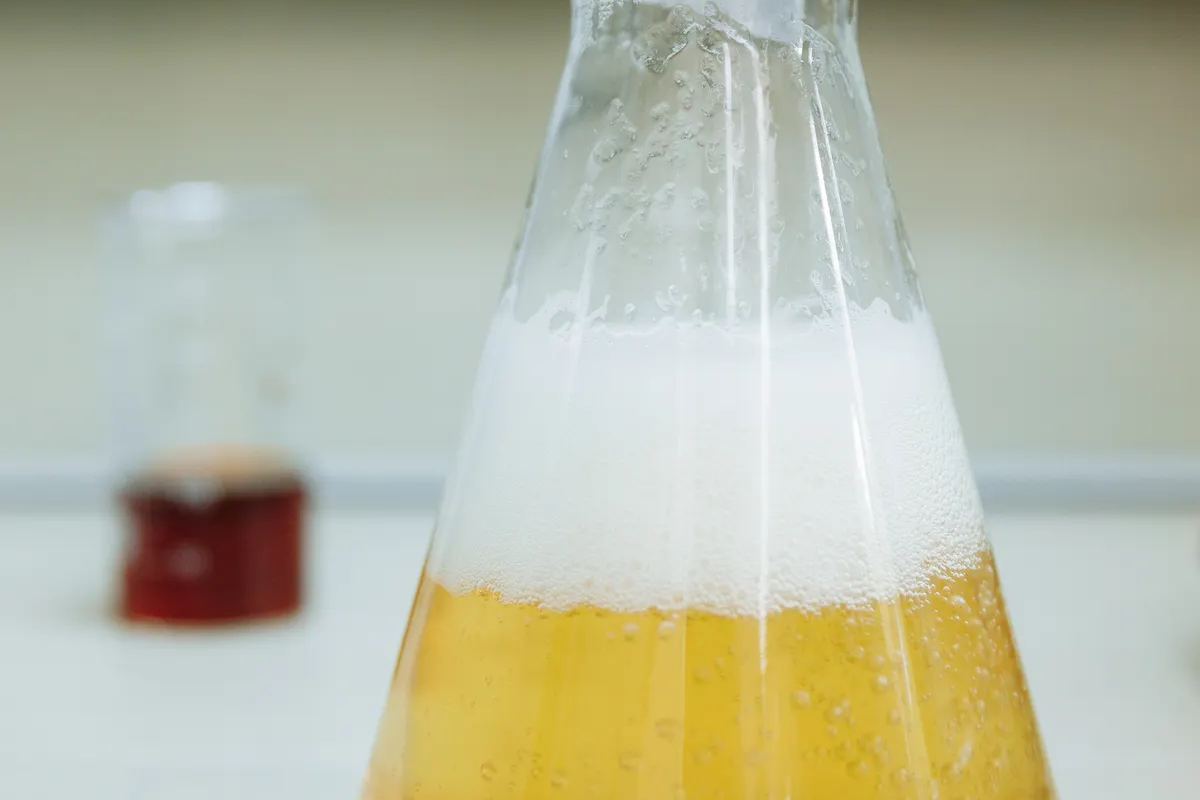
UJSM Bourbon — Uncle Jesse's Simple Sour Mash
Uncle Jesse's Simple Sour Mash, usually shortened to UJSM, is the most widely made bourbon-style recipe in home distilling — and the simplest. There is no cooking, no mashing, and no malt: cracked corn, sugar, water, and yeast go into the fermenter, and the same yeast bed is fed again and again, with a share of each run's backset returned to the next batch.
Before you start: read the Safety guide first. Fermentation itself is low-risk, but distilling the result involves flammable vapour, high temperatures, and legal restrictions in many places — see the Legality guide.
The method was published on the HomeDistiller forum by a distiller writing as Uncle Jesse, who adapted it from a book by J. W. Walstad, Simple Sour Mash to Simple Alcohol Fuel!, refining it through years of his own runs. It earned a place among the forum's Tried and True recipes, and it has stayed there because it asks so little of the maker: no thermometer work, no enzyme timing, no grain bill to balance. The trade-off is that it is a sugarhead — most of the alcohol comes from added sugar, not from the grain — so it will never taste like a fully mashed bourbon. What it does deliver, for very little money and effort, is a genuinely corny whiskey that gets noticeably better with each generation.
How the sour mash works
In a cooked all-grain mash, the corn is the fuel: its starch is gelatinised and converted to sugar, and that sugar ferments. UJSM skips all of that. The cracked corn sits in the fermenter uncooked, where it gives up a little starch very slowly but mostly contributes flavour, while the added sugar does the real fermenting. That is why the recipe works without any mashing skill — there is no conversion step to get wrong.
The "sour" part comes from backset: the acidic liquid left in the boiler after a run. Each new generation replaces part of its water with backset from the previous run, which lowers the pH, discourages unwanted bacteria, and carries flavour compounds forward. The yeast bed stays in the fermenter from batch to batch, so later generations start faster and ferment more reliably than the first. The first run has no backset to draw on, so it is a "sweet" run rather than a sour mash; the recipe's author recommends keeping all of its spirit as feints for the next run rather than drinking it. The second run is the first true sour mash, and by the third or fourth generation the flavour and consistency have usually settled into their best form.
Ingredients
Quantities are for the first generation at the classic 5-gallon (19 L) batch size. Later generations reuse the same corn and yeast bed, so only sugar, water, and backset are added — see the method below. The backset share scales by the same ratio as everything else: at 19 L, a 25% backset share is about 4.75 L.
- 3.2 kg cracked corn (7 lb; broken to 6–8 pieces per kernel, with no preservatives)
- 3.2 kg granulated sugar (7 lb)
- 1 tbsp yeast — distiller's yeast if you have it, otherwise dried baker's yeast
- Water to make up the batch volume (soft, filtered water if your tap water is hard or heavily chlorinated)
Method
First generation
- Put the corn, sugar, and water into the fermenter in that order and stir until the sugar has dissolved. Add the yeast, fit the lid or airlock, and leave it somewhere warm and steady.
- Fermentation should be visible within about 12 hours. Let it run until the bubbling stops, which usually takes 3–4 days, then check with a hydrometer that the gravity has settled near its finished reading.
- Siphon the beer off the top of the lees into your still, taking care not to stir up the sediment. The corn and the yeast bed stay in the fermenter — they are the foundation of every later generation.
- Before you start distilling, pour fresh water back into the fermenter — about three-quarters of the batch volume (around 14 L at this size) — so the yeast is not left high and dry while the still runs for hours. This is also the moment to scoop off any pale, spent corn floating on the surface and replace it with the same volume of fresh cracked corn.
Running the first batch
- Run the still slowly on a pot still: the recipe suggests about 2–3 drops of distillate a second as a beginner's pace. As you collect, dilute a few drops with an equal amount of water and taste them — this is how you learn to recognise the sharp bite of the heads.
- Discard the first 150 mL (about 5 fl oz) as foreshots. Then take conservative cuts: for a first run, keep the spirit collected between about 80% and 70% ABV, and set everything else aside as feints. Spirit collected above 80% is too light to be called whiskey under U.S. law, and belongs in the feints jar too.
- Keep the backset — the liquid left in the boiler after the run. You will need about a quarter of the batch volume (4.75 L at 19 L) for the next generation. The recipe's author advises against going above half backset in any generation.
Later generations
- Dissolve a fresh 3.2 kg of sugar in the backset you saved. Backset straight from the still dissolves sugar quickly, but it must be allowed to cool before it goes anywhere near the fermenter — hot liquid poured onto the yeast bed will kill it.
- Pour the cooled sugared backset into the fermenter, which already holds the water, old corn, and yeast from the previous round, and top up with fresh water to the full batch volume. Stir gently to mix.
- Fit the airlock and ferment for another 3–4 days, until the bubbling ends. Siphon off the beer and run it the same way as before, again replacing the water in the fermenter while you distil and swapping out spent floating corn.
- Repeat the cycle. Replace the corn that floats to the top as it becomes spent; if you plan to keep the same bed going past seven or eight generations, this topping-up is what keeps the flavour alive. Many makers switch to stripping runs — fast runs with no cuts, saving the low wines — and then combine several generations of low wines for one slow, careful spirit run.
Expected results
The sugar load — 3.2 kg in 19 L — puts the starting gravity around 1.060–1.070, with the corn contributing a little extra fermentable material on top. A healthy ferment finishes near 0.990, giving a wash of roughly 8–10% ABV. A 19 L wash at that strength holds about 1.5–1.9 L of pure alcohol, so a single generation yields a modest amount of spirit once foreshots, heads, and tails are set aside — which is why most makers strip several generations and combine the low wines for one spirit run. Fermentation is quick: expect visible activity within 12 hours and a finished wash in 3–4 days at a warm room temperature. Flavour is the one thing you cannot rush — the first generation is drinkable, but the third and fourth are where the sour-mash character really arrives. Check your own gravity readings with the wash ABV calculator.
Tips
- Start with 25% backset. A quarter of the batch volume as backset is the legal minimum for a sour mash and a safe starting point. More backset means more sour character but a lower pH, and the recipe's author advises against going above 50%.
- Never pour hot backset onto the yeast bed. Hot backset is excellent for dissolving sugar; it is lethal to yeast. Let the sugared backset cool to near room temperature before it goes into the fermenter.
- Keep the fermenter wet while you distil. A still run takes hours, and a yeast bed left exposed in an empty fermenter can dry out and die. Topping it with fresh water before you fire up the still costs nothing and saves the next generation.
- Replace the spent corn. Kernels that have given up their flavour turn pale and float. Scoop them off and add fresh cracked corn in the same volume; left alone, the bed runs out of flavour after seven or eight generations.
- Check your corn. Feed corn and bird seed sometimes carry preservatives or mould inhibitors that can stall a ferment. Use plain cracked corn, broken to roughly 6–8 pieces per kernel, and skip anything treated or medicated.
- Age it on oak. The recipe's author ages his on uncharred oak for a traditional Tennessee style; toasted oak sticks are the usual small-batch equivalent. Even a few weeks on oak rounds off the rough edges of the white spirit.
Sources
- Uncle Jesse, “Uncle Jesse's Simple Sour Mash Method” (Tried and True, condensed version) — 5-gal batch: 7 lb cracked corn, 7 lb sugar, 1 tbsp yeast; fermentation in 3–4 days; 25% backset (1¼ gal) to start, not above 50%; first run's spirit kept as feints; flavour peaks at the third or fourth run; 150 mL foreshots; cuts of 80% down to 70% for beginners; corn replaced as it floats and turns spent. Adapted from J. W. Walstad, Simple Sour Mash to Simple Alcohol Fuel! homedistiller.org
- Hefezelle, Tried And True Recipe Book (2018), chapter 14 — the same method scaled to 100 L: 16.8 kg cracked maize, 16.8 kg sugar, 5 tbsp yeast on the first run only, 25–50 L backset on each run; backset cooled below 35 °C before use. scribd.com
- HomeDistiller forum, UJSM discussion — 40 L variant: 7 kg cracked feed corn, 7 kg sugar, 10 L backset; strip discarding 100 mL foreshots down to 20%, then a slow spirit run once 40 L of low wines are saved; age on toasted oak sticks. homedistiller.org