Safety Hub
Distilling is straightforward once you understand the risks — and unforgiving if you ignore them. The three dangers that matter most are fire, pressure, and methanol. This hub covers each one, plus materials, cleaning runs, and storage. Read it in full before your first run.
Foreshots and methanol
Every fermentation produces small amounts of methanol alongside the ethanol you want. Most of that methanol comes from pectin in the fruit, so fruit washes carry more of it than grain or sugar washes do. Methanol boils at 64.7 °C (148.5 °F), well below ethanol at 78.4 °C (173.1 °F), so it comes off the still first — concentrated in the foreshots, the first liquid to leave the condenser.
Methanol itself barely intoxicates. The harm comes from what the liver does with it: it breaks methanol down into formaldehyde, then formic acid, which harms the optic nerve and acidifies the blood. Even 10 mL of pure methanol can blind, and around 30 mL can kill. Symptoms often take 6–30 hours to appear, which makes methanol poisoning easy to miss until serious damage is done.
The defence is simple and absolute: always discard the foreshots. Common guidance is to discard at least 50–100 mL per 5 gallons (19 L) of wash, with many experienced distillers discarding 150–200 mL per 5 gallons, and more for fruit washes. Foreshots also contain acetone (boiling point 56.6 °C) and acetaldehyde (about 20 °C), which taste and smell foul — another reason they never belong in a drinking jar. See the full guide: Foreshots: Why the First Drops Must Be Discarded.
Fire risk and ventilation
Ethanol is highly flammable. Its flash point — the lowest temperature at which its vapour can ignite — is about 13 °C (55 °F), which is below normal room temperature. That means an open container of high-proof spirit is giving off ignitable vapour in any ordinary room, and ethanol vapour is flammable in air at concentrations from about 3.1% to 19% by volume. An ethanol flame is pale blue and easy to miss in daylight.
During a run, the risk points are leaks at joints and seals, vapour escaping from a condenser that is not knocking down all the vapour, and spills near the heat source. Reduce the risk:
- Ventilate. Run the still in a well-ventilated space, ideally outdoors or with doors open and air moving. Never run a still in a sealed room.
- No ignition sources near the still. No open flames, pilot lights, cigarettes, or sparking electrical equipment near the still or the collection jars. If you heat with gas, the burner is an ignition source by definition — keep the collection point as far from it as your setup allows, and never let vapour reach it.
- Check for leaks before and during the run. Seal joints properly (flour paste is the traditional sealant) and check them once the still is hot. If you smell alcohol vapour, find the leak and fix it — or shut down.
- Keep cooling water running. A condenser without cooling water passes live vapour straight out of the end. Confirm water flow before heat goes on, and watch it throughout the run.
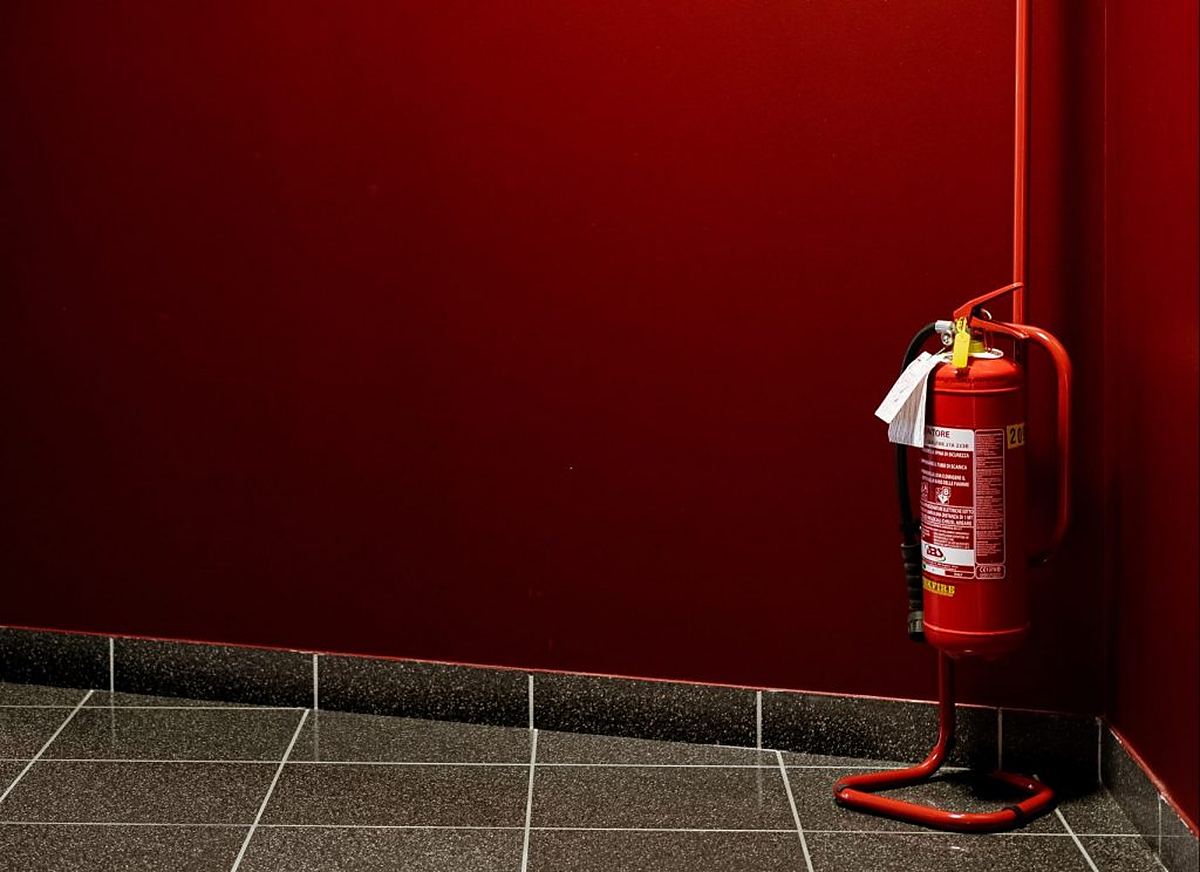
- Keep a fire extinguisher within reach and know how to use it. A dry-powder or CO2 extinguisher is appropriate; never use a jet of water on a burning liquid.
Pressure: never seal a still
A still is not a pressure vessel. It must always have an open path from the boiler to the atmosphere — normally through the condenser and out of the collection end. If that path is blocked (a closed valve, a kinked hose, a condenser plugged with solids, a frozen worm), pressure builds in the boiler fast. A sealed boiler of boiling liquid can rupture violently, spraying scalding wash and flammable vapour.
- Never fit a valve that can close the vapour path. If your design has valves, they must be arranged so the vapour path to atmosphere can never be fully shut while the boiler is hot.
- Never cap or plug the condenser outlet. The end of the condenser stays open at all times.
- Never leave a still heating with no way for vapour to escape. Before every run, confirm the whole vapour path is clear — blow through it or check it visually.
- Do not overfill the boiler. Leave headspace (typically at least 20% of the boiler volume) so the wash cannot foam or surge into the column, and so an electric heating element stays covered.
- Never heat a still with the condenser dry. Cooling water on first, then heat.
Materials: what may touch vapour and spirit
Hot ethanol vapour and high-proof spirit are aggressive solvents. They pick up whatever they touch, so the materials in the vapour path and in contact with collected spirit matter.
- Copper and stainless steel are the standard food-safe materials for stills. Copper also reacts with sulphur compounds in the vapour and improves flavour, which is why many stills use copper in the vapour path even when the boiler is stainless.
- Lead-free solder only. Traditional lead solder is easy to work with and cheap — and completely unacceptable in a still. Lead is toxic, accumulates in the body, and can leach into hot, acidic spirit. Use lead-free solder (tin-silver or tin-copper alloys) and check that it contains no cadmium or antimony either. If you buy a still, ask the builder to confirm the solder used.
- Avoid leaded brass. Ordinary plumbing brass fittings can contain lead, which can leach into spirit. Use copper or stainless fittings instead, or brass that is certified lead-free for drinking-water use.
- No plastic or rubber in the vapour path. High-proof ethanol attacks many plastics and rubbers, which can soften, leach chemicals, or fail under heat. Use PTFE (Teflon) tape and food-grade silicone gaskets where a seal is needed, and collect spirit into glass or stainless containers — never plastic jugs.
- No galvanised steel, no zinc, no aluminium of unknown grade in contact with wash, vapour, or spirit. Acids in the wash can dissolve zinc coatings and other metals into your product.
Cleaning runs for a new still
A new or newly repaired still is dirty inside, even if it looks clean. Soldering flux, machining oils, metal oxides, and dust all need to come out before the still makes anything drinkable. The standard practice, documented by the HomeDistiller community, is a sequence of cleaning runs:
- Scrub and soak. Wash all parts with hot soapy water, scrub solder joints and welds, and soak small parts in dilute vinegar.
- Water steam run. Fill the boiler about three-quarters full of water, bring it to a boil with the condenser off so steam blows through the whole vapour path for 15–20 minutes, then turn the cooling water on and run for about an hour.
- Vinegar run. Run a 50/50 mix of vinegar and water the same way. The acid dissolves scale and flux residues that water alone will not shift. This is also a good time to check every joint for leaks.
- Sacrificial alcohol run. Run a cheap sugar wash (or cheap wine) through the still in the normal way — and discard everything that comes off, with no exceptions. Do not taste it, do not keep it, do not add it to a later batch. Never use denatured alcohol for this step.
Each step removes something the others cannot: water takes out loose dirt, vinegar takes out scale and flux, alcohol takes out residues that only dissolve in alcohol. After the sacrificial run, rinse everything with water and let it drain dry. Repeat the sequence if the still has been repaired or stored for a long time.
Safe storage
- Store high-proof spirit in glass or stainless steel, clearly labelled with the contents and the ABV. Never store it in plastic containers not rated for alcohol, and never in a container that once held something else — especially not one that held chemicals or fuel.
- Keep it cool, dark, and away from ignition sources — not next to a water heater, furnace, or stove. Keep containers sealed: open spirit evaporates, loses strength, and fills the room with flammable vapour.
- Keep it out of reach of children and pets, and out of any area where someone might mistake it for water or another drink.
- Label foreshots and feints clearly if you keep them at all, and store them separately from drinking spirit. Foreshots should be discarded, not stored.
Run-day checklist
- Vapour path open to atmosphere; no valve can close it; condenser outlet unobstructed.
- Boiler filled to no more than about 80% capacity; heating element covered.
- Cooling water flowing before heat is applied; spare water or a backup plan if the supply fails.
- Joints sealed; no leaks once hot; ventilation open; no ignition sources nearby.
- Collection jars labelled and ready; foreshots jar separate and clearly marked for disposal.
- Fire extinguisher within reach; phone nearby; someone knows you are running.
- You will stay with the still until it is off and cool.
Sources
- World Health Organization, “Methanol poisoning outbreaks” information note — methanol metabolism to formaldehyde and formic acid; blindness, coma, and death; delayed onset. methanol.org (WHO note, PDF)
- Evidence-Based Medicine Guidelines, “Alcohol poisoning” — as little as 10 mL of methanol may cause blindness; 30–200 mL may be lethal. evidence.unboundmedicine.com
- Still Brewin', “Making Cuts” — boiling points (acetone 56 °C, methanol 64 °C, ethanol 78.4 °C); foreshots guidance of 100 mL per 5 gallons of wash; methanol risk in context. stillbrewin.com
- Good Ol' Moonshine, “Why Do You Throw Out The First Batch Of Moonshine?” — foreshots volumes by batch size (150–200 mL per 5-gallon wash). goodolmoonshine.com
- CNESST / WHMIS information sheet for ethyl alcohol — flash point 13 °C (closed cup); “highly flammable liquid and vapour.” reptox.cnesst.gouv.qc.ca
- PharmaChemE, “Ethanol: Boiling Point, Flash Point, TLV” — flammable limits 3.1–19% by volume in air; flash point about 13 °C. pharmacheme.in
- HomeDistiller forum, “Cleaning a new still” — soak and scrub, vinegar cleaning run, ethanol cleaning run; never use denatured alcohol. homedistiller.org
- HomeDistiller forum, “Cleaning your new still correctly” — water, vinegar, and sacrificial alcohol runs; discard the sacrificial distillate with no exceptions. homedistiller.org
- Moonshine Still Project, “The Dangers of Lead in DIY Moonshine Stills” — lead sources in stills, including lead solder and generic brass fittings. moonshinestillproject.com
- DIY Distilling, “How To Solder Distilling And Brewing Equipment” — lead-free solder (tin-silver, tin-copper); avoid cadmium and antimony. diydistilling.com
- HomeDistiller wiki, main page — community rules and reference material on safe practice and materials. homedistiller.org/wiki