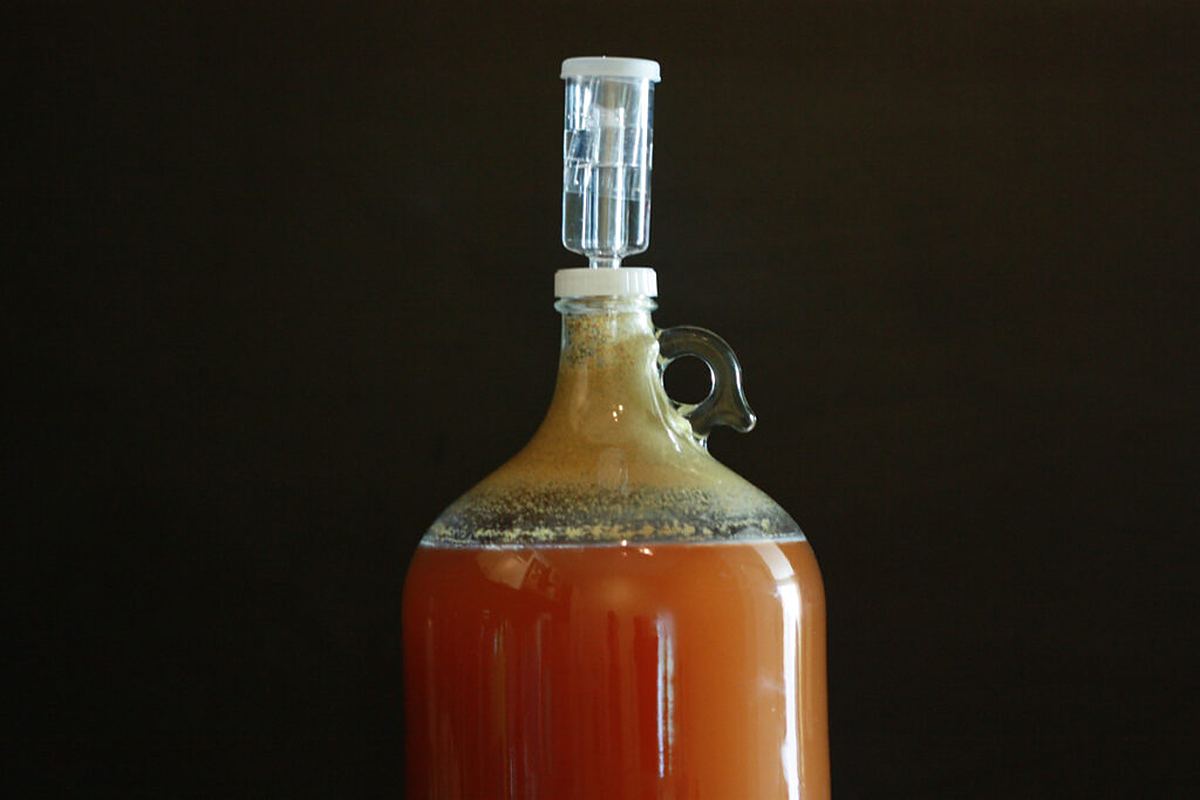
Sweet Feed Whiskey
Sweet feed is horse feed — a mix of cracked corn, oats, and barley coated in molasses — and it makes a remarkably good whiskey. This is Kentucky Shinner's Tried and True recipe from the HomeDistiller forum: a generational sour mash in the same family as UJSM, where the feed and yeast bed stay in the fermenter and only sugar, water, and backset are added on each new round.
Before you start: read the Safety guide first. Fermentation itself is low-risk, but distilling the result involves flammable vapour, high temperatures, and legal restrictions in many places — see the Legality guide.
The idea is the same one that makes UJSM work: the grain is there for flavour, not for alcohol. The molasses coating on the feed adds a dark, caramel depth that plain corn cannot, and the oats and barley round it out, while the added sugar does most of the fermenting. Because the feed, the yeast bed, and a share of backset carry over from batch to batch, the character deepens with each generation — makers in the original thread report the second batch already beating the first, and the flavour keeps building from there. The recipe below is scaled down from the 100-litre version published in the HomeDistiller Tried And True Recipe Book; the original forum thread runs the same recipe in 5-gallon buckets, and an older moonshiner's version of the same idea — feed four inches deep in a bucket, 5 lb of sugar, boiling water, 4–5 days — has been passed around for far longer than the forum has existed.
Choosing the right feed
This is the one part of the recipe where a wrong purchase ruins the batch, so it deserves its own section. Sweet feed must be plain whole-grain feed: cracked corn, oats, and barley with molasses, and nothing else. The version makers in the thread buy is an all-grain sweet feed sold for horses — one widely cited example is a Tractor Supply product whose ingredient list is nothing but corn, oats, barley, and a little molasses, with no other additives. Two things to avoid: pellets and medication. Pelleted feed is bound with fillers and binders that turn the wash into a starchy sludge, and some livestock feeds contain medications or preservatives that can stall a ferment or are simply not something you want anywhere near a still. Read the label before you buy, and if the bag lists anything beyond grain and molasses, put it back.
Ingredients
Quantities are scaled from the published 100-litre recipe. The original measures yeast by volume — 500 mL per 100 L — which works out to about half a cup for this batch. The feed and the yeast go in once, on the first run; sugar and backset are added on every run, including the first.
- 5 kg sweet feed (plain grain-and-molasses horse feed, no pellets — first run only)
- 5 kg white sugar (on each run)
- 125 mL dried yeast (about ½ cup — first run only)
- 12.5 L backset, saved from the previous run (on each run, from the second onward)
- Water to make up the batch volume
Method
First generation
- Tip the sweet feed into the fermenter. Bring about 5 L of water to a hard boil and pour it over the feed, then add the sugar.
- Stir well for about 15 minutes, until the sugar has dissolved and the feed is thoroughly soaked, then leave the mixture to rest for 90 minutes. The hot soak softens the grain and draws the molasses off the feed.
- Top up with fresh, cool water to the full batch volume and stir again. Wait until the temperature has fallen below 35 °C (95 °F), then add the yeast and stir gently.
- Fit the lid or airlock and leave it to ferment until it is done — about 6 days at a warm room temperature. It is finished when the bubbling has stopped and the wash tastes dry rather than sweet.
- Rack the wash into your still, leaving the lees — the sediment, the feed, and the yeast bed — undisturbed in the fermenter. Run it as a stripping run, saving the low wines, and keep the backset for the next generation.
Later generations
- Right after the run, while the backset is still hot, dissolve the fresh 5 kg of sugar in it. Hot backset takes the sugar up easily — but it must then be left to cool below 35 °C before it goes anywhere near the fermenter, or it will kill the yeast bed.
- Pour the cooled, sugared backset onto the lees in the fermenter, then top up with fresh water to the full batch volume.
- Fit the airlock and ferment for about 6 days, as before, then rack and run it again. Repeat the cycle for as many generations as you like.
- Between generations, scoop off the feed grains that have turned pale white or grey and float on the surface — they are spent — and replace them with the same amount of fresh sweet feed. The darker grain underneath and the yeast bed at the bottom stay put.
Expected results
The sugar alone — 5 kg in 25 L — puts the starting gravity near 1.080, and the molasses coating on the feed pushes it a little higher, so expect an OG around 1.075–1.085. The potential alcohol is roughly 9–11% ABV if the wash ferments dry, though the final gravity may stay above 1.000: molasses contains a good share of unfermentable solids, so the hydrometer reads high even on a finished wash, just as it does on an all-molasses rum wash. Call it done when the gravity holds steady for two days, the bubbling has stopped, and the wash tastes dry — the exact final gravity matters less than the stable reading. A 25 L wash at around 10% carries about 2.5 L of pure alcohol; a stripping run concentrates that into low wines around 30% ABV, ready to combine for a slow spirit run. Fermentation takes about 6 days per generation in a warm room, and longer in a cool one. Run your own readings through the wash ABV calculator and the strip-run calculator.
Tips
- Backset: 50% or 25%? The published recipe uses half the batch volume as backset on each run, but experienced makers in the original thread recommend keeping backset to no more than a quarter of the batch, to stop the pH falling so far that the yeast struggles. If this is your first generational mash, the lower figure is the safer start — you can always raise it later once you know how your water and yeast behave.
- Never pour hot backset onto the yeast bed. Dissolving the sugar in hot backset is the right move; tipping it into the fermenter while it is still hot will kill the yeast you have been carrying forward. Below 35 °C, every time.
- Rack carefully — feed solids scorch. Fine grain and molasses solids burn easily on a heated boiler surface and can throw a burnt note into the spirit. Let the wash settle, siphon the clear liquid off the top, and leave the sludge behind. If you run a pot still, straining the wash through a pillowcase or fine cloth before charging the boiler is an old precaution that still makes sense.
- Flavour builds with generations. The first batch is good; the second is usually better, and the character keeps deepening as the yeast bed and the backset carry flavour forward. Do not judge the recipe on a single generation.
- Age it on oak. Sweet feed whiskey takes well to toasted or charred oak, and a few weeks on oak sticks turns a decent white whiskey into something much rounder. Makers in the thread report drinking it at around 90 proof (45% ABV) with no dilution.
Sources
- Hefezelle, Tried And True Recipe Book (2018), chapter 13, “Kentucky Shinner's Sweetfeed Whiskey” — per 100 L: 20 kg sweet feed (first run only), 20 kg white sugar (each run), 500 mL dry yeast (first run only), 50 L backset (each run); 20 L boiling water, stir 15 minutes, rest 90 minutes, pitch below 35 °C, ferment about 6 days; later generations dissolve sugar in hot backset and cool below 35 °C. scribd.com
- HomeDistiller forum, “sweetfeed whisky” thread — scrape off the white-to-grey spent grain and replace the same amount; keep backset at a quarter of the batch or less; dissolve the sugar in hot backset and cool it before it meets the yeast bed; all-grain sweet feed is corn, oats, barley, and a little molasses with no other additives and no pellets; second batch better than the first. homedistiller.org
- HomeDistiller forum, “Free Recipes for: Shine, Whiskey, Rum, Brandy, Etc” — old-timer sweet feed moonshine: feed four inches deep in a 5-gallon bucket, 5 lb sugar, half-filled with boiling water, rested 90 minutes, topped with cool water, ready in 4–5 days; strain through a pillowcase before running in a pot still. homedistiller.org