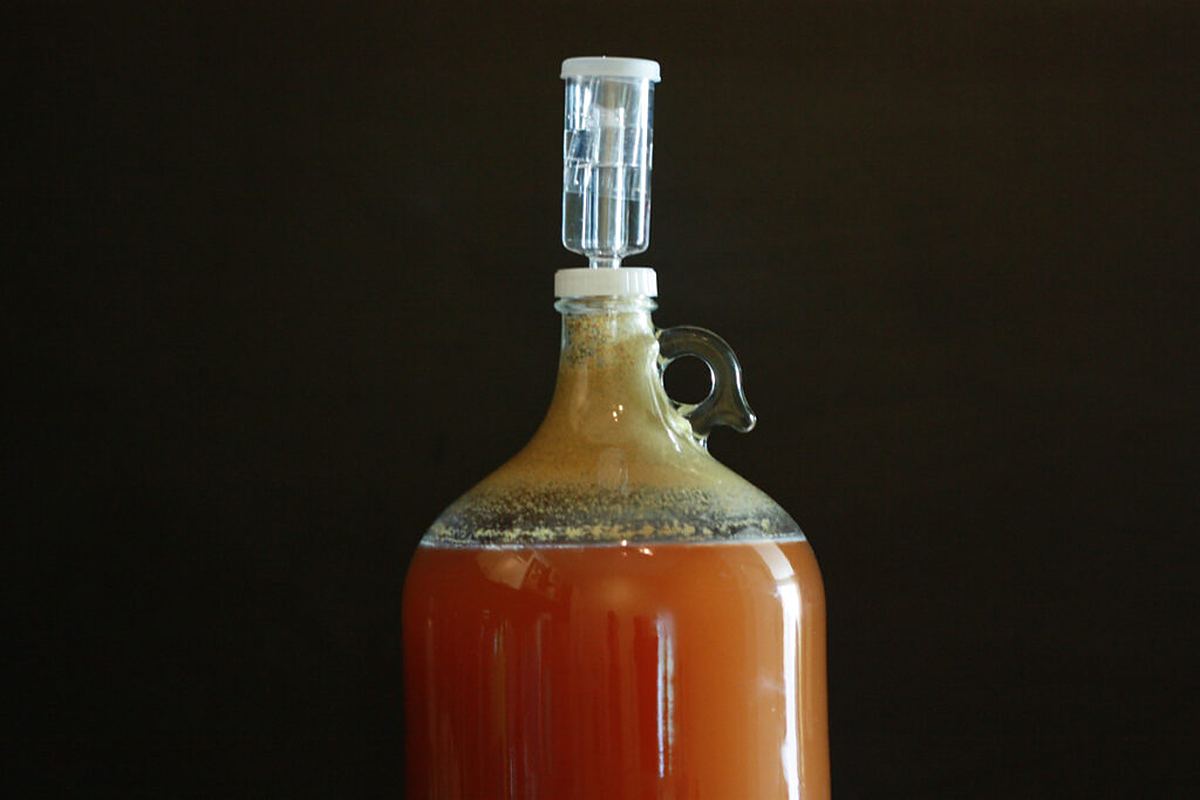
Water & Yeast Nutrients
Yeast is a living thing, and sugar alone will not keep it alive. A wash needs clean water, the right acidity, nitrogen to build new cells, and a spread of minerals and vitamins — and a plain sugar wash contains almost none of these. Get the water and nutrients right and fermentation is fast, clean, and complete. Get them wrong and you get slow ferments, sulfur smells, and stuck batches.
Water first: start with a clean base
Water is the largest ingredient in any wash by volume, and it is the one most often taken for granted. In most cases ordinary tap water is fine — but "fine to drink" and "fine to ferment" are not the same thing. Municipal water is treated with disinfectants that are designed to kill microbes, and yeast is a microbe. It also carries dissolved minerals that vary enormously by location: soft water may lack the minerals yeast wants, while very hard water can push pH in unhelpful directions.
The practical starting point is simple: know what is in your water. Your water supplier publishes a quality report, and it will tell you whether your supply is disinfected with chlorine or chloramine, and how hard it is. If your water tastes strongly of chlorine, smells of a swimming pool, or comes from a source you don't trust, treat it before it goes anywhere near yeast. Reverse-osmosis or distilled water is a blank slate — useful if your tap water is very hard or heavily treated, but note that it contains no minerals at all, so a wash built on it needs its minerals added back deliberately.
Chlorine and chloramine
Chlorine and chloramine are the two disinfectants you are likely to meet, and they behave very differently. Free chlorine is volatile: leave water uncovered for 24 hours and most of it escapes into the air, and boiling drives it off faster still. Chloramine is deliberately more stable — water companies switched to it precisely because it persists in the pipes — and standing or boiling barely touches it. Under identical conditions, chlorine loses 90% or more in a day uncovered while chloramine loses less than 10%.
Either one left in the wash is trouble, and not only because it stresses yeast. During fermentation, yeast produces phenolic compounds, and chlorine and chloramine react with those phenols to form chlorophenols — compounds with a medicinal, plastic, sticking-plaster character detectable at extremely low concentrations. A wash made with untreated chlorinated water can carry that off-flavour through distillation.
The standard fix is a Campden tablet — potassium metabisulfite (or sodium metabisulfite) — which reduces both chlorine and chloramine to harmless chloride and sulfate ions. The usual dose for dechlorination is about one tablet per 20 gallons (75 L) of water, added and stirred in before you build the wash; the reaction completes quickly once the tablet dissolves. For a typical 5-gallon wash, half a tablet is plenty. The other reliable options are filtration through catalytic carbon (ordinary activated carbon is less effective against chloramine) or a reverse-osmosis system, which removes chloramine through its carbon pre- and post-filters. Note that the dechlorination dose is far smaller than the dose winemakers use to sterilise must — don't confuse the two.
Minerals: what the water carries
Yeast needs a handful of minerals to build healthy cells and run its metabolism. The most important are potassium (the most abundant ion inside a yeast cell), magnesium, calcium, and zinc, plus trace amounts of others. Most tap water supplies some of these; grain mashes supply more. A sugar wash built on soft or reverse-osmosis water may supply almost none.
In practice, home distillers cover the mineral bases with a few cheap additions. Epsom salts (magnesium sulfate) supply magnesium — a pinch per batch is the usual approach, and brewing references suggest keeping magnesium modest, roughly below 50 ppm. Calcium can come from gypsum (calcium sulfate) or chalk (calcium carbonate), the latter also helping to buffer pH. Zinc is needed in tiny amounts — the useful range is roughly 0.4–1 ppm — and too much is toxic to yeast, so it is best supplied as part of a complete nutrient or a crushed multivitamin rather than dosed on its own. If you use a complete nutrient blend or dead yeast (see below), the minerals largely come along for free.
pH: the acidity sweet spot
Yeast ferments best in mildly acidic conditions. Research on Saccharomyces cerevisiae puts the optimal range for ethanol production at about pH 4.0–5.0, with the highest ethanol production rate around pH 5.0; starting a wash near pH 4.5–5.5 gives the yeast a good runway. Acidity also helps keep bacteria in check, since most spoilage organisms prefer conditions closer to neutral.
Fermentation itself pushes pH down: yeast releases organic acids, takes up basic amino acids, and produces dissolved carbon dioxide, so a wash that starts near 5.0 will typically finish a unit or so lower. In sugar washes this drop can happen fast — a "pH crash" within the first 24 hours, sometimes below pH 4, is a well-known problem. Below about pH 3, yeast growth stalls, and a wash that crashes hard can stick even with nutrients present.
The fix is buffering. Calcium carbonate (chalk) raises pH and resists further drops; it is the standard correction when a wash tests below the target range. To lower pH at the start — if your water is alkaline — citric acid or lemon juice does the job, and lemon juice is also the acid in the classic Birdwatcher's sugar wash. A cheap pH meter or test strips are worth owning: guessing at pH is how washes stall.
What yeast actually needs
To ferment sugar into alcohol, yeast needs more than sugar. It needs nitrogen to build proteins and new cells — it can only absorb nitrogen as ammonia or amino acids, not as whole proteins. It needs vitamins, especially the B vitamins, to run its metabolism. It needs minerals, as above. And it needs lipids for strong cell membranes, which matter most in high-alcohol ferments where the cell wall is under stress.
The key concept is yeast assimilable nitrogen, or YAN: the nitrogen yeast can actually use, measured in milligrams per litre. For a typical sugar wash, the useful target is around 250 mg/L of YAN. Below about 150 mg/L, stuck fermentations become likely. Go far above 500 mg/L and you get more esters and ethyl acetate — fruity and solvent notes you may not want. A wash that is short of nitrogen ferments slowly, throws sulfur smells, and may stop with sugar still left.
DAP: the workhorse nitrogen source
Diammonium phosphate, or DAP, is the cheapest and most widely used yeast nutrient in distilling and winemaking. It is an inorganic nitrogen source — about 21% nitrogen by weight — and it dissolves readily in water. One gram of DAP per litre of wash supplies roughly 210 ppm of YAN, so a modest dose covers most of a sugar wash's nitrogen needs.
DAP's main job, beyond feeding growth, is preventing hydrogen sulfide — the rotten-egg smell that nitrogen-starved yeast produces. Used together with a complete nutrient, it is the standard approach for sugar washes. The usual caution is not to rely on DAP alone: it supplies nitrogen and phosphate, but no vitamins, minerals, or amino acids. A wash fed only DAP can still stall for want of the other things yeast needs, which is why it is normally paired with a complete nutrient or a food-based source such as dead yeast or tomato paste.
Complete nutrients: Fermaid and friends
Complete nutrients bundle nitrogen with the rest of what yeast needs: amino acids, vitamins, minerals, and yeast hulls (the cell walls of dead yeast, which absorb toxins and help keep yeast suspended). Fermaid K is the best-known example — it combines DAP with yeast hulls, vitamins, and minerals — and Fermaid O is a similar product that uses organic nitrogen from yeast rather than DAP. Other brands, such as Fermax, follow the same pattern. Turbo yeast sachets include their own nutrient blend, which is part of why they ferment so aggressively.
There is also a rehydration nutrient, Go-Ferm, designed to be mixed into the warm water used to rehydrate dried yeast before pitching. It supplies micronutrients at the moment the yeast is most vulnerable — waking up dry — and is credited with reducing problem fermentations. See our yeast starter guide for the rehydration process itself.
Dead yeast and kitchen options
You don't have to buy a branded nutrient to feed a wash. Dead yeast — baker's yeast boiled for a few minutes to kill it — is a complete nutrient in itself: it contains amino acids, vitamins, and minerals, with a YAN content of roughly 3–5%. A common approach is 50–75 g of dead yeast per 25 L of wash, combined with DAP to reach the nitrogen target. It is cheap, available everywhere, and hard to overdose.
Tomato paste is the other classic home-distiller nutrient, famous from Birdwatcher's tomato paste wash — one of the most popular sugar wash recipes in home distilling. The original recipe uses 3 cups of tomato paste (with the juice of 3 lemons and about 18 kg of sugar) in an 80-litre wash, which scales to roughly 170 g of tomato paste per 19-litre (5-gallon) batch. Tomato paste supplies nitrogen, vitamins, and minerals, and the tomato flavour does not carry over into the distillate. Other food-based options distillers have used include wheat germ tea, bran cereals, and apple pulp — anything that gives the yeast a complex food source rather than bare sugar. When buying tomato paste for a wash, avoid brands with preservatives or very high salt.
Nutrient schedules: when to feed
When you add nutrients matters almost as much as how much. Dumping the full dose in at the start can shock the yeast with a sudden rush of nitrogen and encourage off-flavours. The better practice, borrowed from winemaking, is staggered additions: add roughly half the nutrient at pitching, and the rest once about a third of the sugar has been consumed — typically 12–24 hours in. Splitting the dose this way keeps nitrogen available through the whole fermentation instead of front-loading it.
The same logic applies to sugar itself. Adding all the sugar at once creates high osmotic pressure that stresses yeast; adding it in stages — "metering" the wash — keeps the yeast in gentler conditions and can improve the final yield. This matters most for high-gravity washes aimed at high ABV. For a standard wash under 10% ABV, a single sugar addition with split nutrients is usually enough.
Why sugar washes need help and grain mashes mostly don't
The difference comes down to what the raw material brings with it. Refined sugar is pure sucrose: energy and nothing else. It contains no nitrogen, no vitamins, no minerals, and no amino acids. A yeast pitched into sugar water has fuel but no building materials, and it will struggle, stall, or throw off-flavours unless you supply everything it needs.
A grain mash is a different world. Malted barley and other grains bring amino acids, vitamins, minerals, and lipids left over from the grain itself and released during mashing. That is why a whiskey mash or an all-grain beer wort ferments happily with little or no added nutrient. Fruit sits in between: fruit juice carries some nitrogen and vitamins, but often not enough for a complete, clean ferment, which is why winemakers routinely add nutrients too. The rule of thumb is simple: the more refined the sugar source, the more help the yeast needs.
Trouble signs: when nutrients are the problem
A nutrient-starved wash announces itself. The classic sign is a rotten-egg or sulfur smell during fermentation — hydrogen sulfide from yeast short of nitrogen. A slow start, a fermentation that crawls and then stops with gravity still high, or a wash that smells sharp and acidic early on (the pH crash) all point the same way. The fixes are the ones in this guide: check pH and correct it with calcium carbonate, add a split dose of DAP and a complete nutrient, and make sure the yeast was healthy when pitched. For a wash that has already stalled, see our guide to stuck fermentations.
One final caution: nutrients help yeast, but they do not rescue bad practice. Clean equipment, a healthy yeast pitch at the right temperature, and a sensible starting gravity matter just as much. Nutrients are one leg of a healthy fermentation, not a substitute for the others.
Sources
- HomeDistiller wiki, "Birdwatcher's sugar wash recipe" — tomato paste as yeast nutrient, flavour not carrying over; lemon juice for pH; original 80-litre recipe (3 cups tomato paste, juice of 3 lemons, ~18 kg sugar). homedistiller.org
- Home Distiller forum, "Think like a yeast!" — YAN targets (below 150 mg/L stuck, ~250 mg/L optimal, above 500 mg/L excess esters); DAP 21% nitrogen; dead yeast YAN 3–5%; split nutrient additions at one-third sugar depletion; zinc 0.4–1 ppm. homedistiller.org
- Home Distiller forum, "Metering a sugar wash" — Fermaid K and DAP as standard supplements; DAP inhibiting hydrogen sulfide; tomato paste as substrate; Go-Ferm rehydration nutrient. homedistiller.org
- Home Distiller forum, "Chlorine & Chloramine Treatment" (reprinted from MoreBeer) — Campden tablet dosing (one tablet per 20 gallons at 3 mg/L chloramine); catalytic carbon and reverse osmosis as alternatives. homedistiller.org
- Lin et al., "Factors affecting ethanol fermentation using Saccharomyces cerevisiae BY4742" — pH 4.0–5.0 optimal for ethanol production, highest rate at pH 5.0; acetic acid increasing below pH 4.0. academia.edu
- ScienceInsights, "What Is the Ideal pH for Yeast Growth and Fermentation?" — best growth near pH 4, best fermentation pH 4–6, starting target 4.5–5.5; pH falling about one unit during fermentation. scienceinsights.org
- The Brew Mechanic, "Understanding pH Control in Fermentation process" — spirit fermentation sweet spot pH 4.5–5.4; pH crash in sugar washes within 24 hours; calcium carbonate to raise pH. thebrewmechanic.com
- DIY Distilling, "The Best Yeast Nutrient For Homebrewing and Distilling" — DAP: 1 g/L yields 210 ppm YAN; DAP dosage range 0.4–0.8 g/gallon; Fermaid K contents. diydistilling.com
- Craft Beer Brewing Kit, "The Campden Tablet Routine" — chlorine 90%+ lost in 24 hours uncovered vs chloramine under 10%; chlorophenols detectable at 1–5 parts per billion; one Campden tablet treats 20 gallons. craftbeerbrewingkit.com
- BrewCrafter, "Brewing Water Treatment: The UK Home Brewer's Guide for 2026" — chlorophenols and medicinal off-flavours; magnesium guidance around 50 ppm; mash pH window 5.2–5.6. brewcrafter.co.uk