Hydrometer vs Alcoholometer
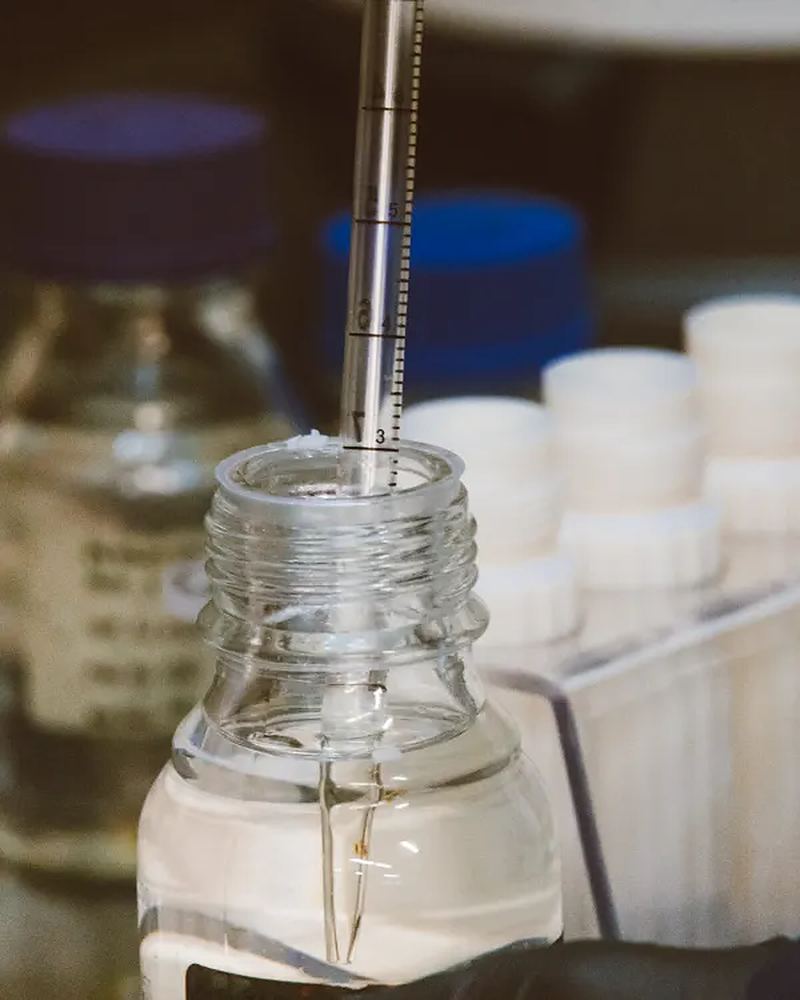
They look like twins: glass tubes with a weighted bulb, a narrow stem, and a paper scale inside. Drop either one in a liquid and it floats at a depth that tells you something about that liquid. But a hydrometer and an alcoholometer answer different questions, work on different scales, and are used at different stages of the process. Use the wrong one and the number you read means nothing at all.
The same principle, different jobs
Both instruments work on buoyancy. A hydrometer floats in a liquid and sinks until the weight of the liquid it displaces equals its own weight. In a dense liquid it floats high; in a thin liquid it sinks low. The scale on the stem converts that floating depth into a number. The difference between the two instruments is what their scales are calibrated to measure — and that difference is everything.
A hydrometer is calibrated against the density of water. It reports specific gravity (SG): the density of your liquid relative to pure water, which reads 1.000. A sugary wash is denser than water, so it reads above 1.000 — a typical starting wash might read 1.060 to 1.090. An alcoholometer, also called an alcohol meter or proof hydrometer, is calibrated against mixtures of ethanol and water. Its scale reads directly in percent alcohol by volume (% ABV), and often in proof alongside it. Same physics, same glass tube, entirely different ruler.
The hydrometer: measuring sugar and fermentation
The hydrometer is your fermentation instrument. Before fermentation begins, you float it in the wash and record the original gravity (OG): the higher the reading, the more sugar is dissolved in the liquid. A triple-scale hydrometer — the most common type for homebrewers — carries three scales on one stem: specific gravity, Brix (or Plato, measuring sugar as a percentage by weight), and potential alcohol, which estimates how much alcohol the sugar could produce if fully fermented.
As yeast works, it converts sugar into alcohol and carbon dioxide. Sugar is denser than water; ethanol is less dense than water (about 0.789 g/cm³, roughly 21% lighter). So as fermentation progresses, the liquid gets steadily thinner, and the hydrometer sinks lower. When the reading stops falling and holds steady over a couple of days, fermentation is done. The final gravity (FG) of a fully fermented wash is usually at or slightly below 1.000 — a dry wine or wash may read around 0.990–0.998, because the alcohol in it is lighter than water.
The difference between OG and FG is what tells you the alcohol content of the wash: the bigger the drop, the more sugar was converted. A standard formula (multiply the gravity drop by about 131) gives the ABV, and our wash ABV calculator does the arithmetic for you. Note what the hydrometer never does: it never measures alcohol directly. It measures density, and you infer the alcohol from how much the density changed.
The alcoholometer: measuring spirit strength
The alcoholometer is your distillation instrument. After the spirit has been distilled — after everything except ethanol and water has been removed — you float it in the spirit and read the strength directly off the scale. No before-and-after readings, no arithmetic: the scale says 40%, 65%, or 90% ABV, and that is the answer.
Many alcoholometers carry two scales. The Tralles scale reads percent alcohol by volume, and the proof scale reads exactly double the ABV — the US definition of proof is twice the ABV, so 40% ABV is 80 proof. (British proof, historically, used a different definition, but US proof is the standard on modern instruments and in modern recipes.) Some alcoholometers are built for a narrow range — 0–40%, 40–70%, 70–100% — because a shorter scale range gives finer, more readable graduations. A single wide-range instrument covering 0–100% is convenient but harder to read precisely.
The alcoholometer only works because the density of an ethanol–water mixture has a fixed, known relationship to its alcohol content. Pure water has a specific gravity of 1.000; pure ethanol is 0.789. Every mixture in between has a density that corresponds to one and only one alcohol percentage — which is what makes the direct-reading scale possible.
Why an alcoholometer reading is meaningless in wash
This is the single most common measuring mistake in distilling: floating an alcoholometer in a wash and believing the number. The alcoholometer's scale assumes the liquid contains only ethanol and water. A wash contains dissolved sugar, and sugar changes the density in the opposite direction from alcohol — it makes the liquid denser, so the alcoholometer floats higher than it should, and the reading comes out far lower than the true alcohol content. The error is not small and it is not correctable: there is no way to separate the sugar's effect on density from the alcohol's effect with a single float reading.
The same problem applies to anything else dissolved in the spirit. Liqueurs, flavoured spirits, and spirits with added essences all contain sugars or glycerol, and all of them will read wrong on an alcoholometer — usually low, because the dissolved solids make the liquid denser and hold the instrument up. Even some commercial vodkas, which contain tiny amounts of sugar or glycerol added for mouthfeel, read a few points below their labelled strength. The rule is absolute: measure spirit strength only on raw, unflavoured distillate, before anything is added to it. If you need the strength of a sweetened product, you have to calculate it from the volumes you mixed, not measure it with a float.
Why a hydrometer cannot proof a spirit
The reverse mistake is less common but just as fruitless. A brewing hydrometer's scale typically runs from about 0.980 to 1.100 specific gravity — the range that covers sugary worts and fermenting washes. Distilled spirit is far outside that range: 40% ABV spirit has a specific gravity around 0.948, and 90% spirit is around 0.833. Float a brewing hydrometer in a jar of spirit and it will sink until it rests on the bottom of the jar, the scale disappearing below the surface. There is nothing to read.
Even if the scale extended far enough, the hydrometer would only give you a density number, not an alcohol percentage — you would still need a conversion table to turn specific gravity into ABV. The alcoholometer is that table, built into the instrument. Use each tool for the job its scale was made for.
Temperature correction for both
Both instruments are calibrated at a specific temperature, printed on the scale or the stem — commonly 20 °C (68 °F), and 60 °F (15.6 °C) on many North American instruments. Density changes with temperature: a liquid is less dense when warm, denser when cold. So a reading taken at any other temperature is off, and the error grows with the distance from the calibration point.
The direction of the error is worth memorising. In warm liquid, the liquid is thinner, so the instrument sinks deeper than it should. On a hydrometer that means a lower specific gravity reading than the true value; on an alcoholometer it means a higher ABV reading than the true value. In cold liquid the reverse happens. The effect is large: an alcoholometer floated in hot spirit straight off the still can read 15–20 percentage points higher than the true strength.
There are two ways to handle it. The better way is to cool (or warm) your sample to the calibration temperature before measuring — a water bath and a thermometer will get you there in a few minutes. The quicker way is to measure the temperature of the sample, note the reading, and apply a temperature correction from a chart or calculator. Either way, never trust a reading taken at an unknown temperature. Our temperature correction calculator handles the arithmetic for both instruments.
Reading either instrument well
A few habits make the difference between a useful reading and a guess:
- Use a tall, narrow test jar (a hydrometer trial jar) with enough liquid for the instrument to float freely without touching the bottom or sides.
- Lower the instrument gently and give it a light spin to shake off bubbles clinging to the bulb — bubbles add buoyancy and push the reading off.
- Read at eye level, taking the level of the liquid against the stem — the bottom of the meniscus, not the top edge where liquid climbs the glass.
- Check calibration in distilled water. A hydrometer should read exactly 1.000 in distilled water at its calibration temperature; an alcoholometer should read 0% ABV. If it does not, note the offset and apply it to every reading — or replace the instrument.
- Clean and dry after use. Dried sugar or spirit residue on the stem changes the instrument's weight and throws off future readings. Rinse, dry, and store upright in its tube.
Quick reference
| Hydrometer | Alcoholometer | |
|---|---|---|
| Measures | Specific gravity (density relative to water) | Alcohol by volume (% ABV) and proof |
| Used on | Wash, wort, and must — before and during fermentation | Distilled spirit — after distillation, before flavouring |
| Scale range | About 0.980–1.100 SG (plus Brix and potential alcohol) | 0–100% ABV (often split into narrower ranges) |
| Reads alcohol? | No — infers it from the gravity drop (OG minus FG) | Yes — directly, from the density of the ethanol–water mix |
| Fails when | Used on distilled spirit (sinks past the scale) | Used on wash or sweetened spirit (sugar skews density) |
| Calibration temp | Usually 20 °C (68 °F) or 60 °F — check the stem | Usually 20 °C (68 °F) or 60 °F — check the stem |
Sources
- The Brew Mechanic, “Alcoholmeter vs Hydrometer — Understand the difference?” — alcoholmeters calibrated to ethanol density at 20 °C; hydrometers calibrated to water density; reflux distillate at 90–95% ABV. thebrewmechanic.com
- DIY Distilling, “Alcoholmeter vs Hydrometer” — ethanol density 0.789 g/cm³, about 21% lower than water; alcoholmeters for distilled spirits, hydrometers for fermented products. diydistilling.com
- Brewhaus, “Alcoholmeter or Hydrometer” — alcoholometers work only on pure distilled spirits with no sugar or glycerin; commercial vodka reading low because of added mouthfeel agents. brewhaus.com
- Home Distiller forum, “Hydrometer Vs Alcoholmeter” — hydrometer range 0.980–1.100 SG; alcoholmeter range 0.789–1.000 SG; hot spirit can read 15–20 points high on an alcoholmeter. homedistiller.org
- Mile Hi Distilling, “How to Use an Alcohol Meter” — Tralles scale reads ABV, proof scale reads double; temperature best checked at 68 °F; sugar and flavourings give inaccurate readings. milehidistilling.com