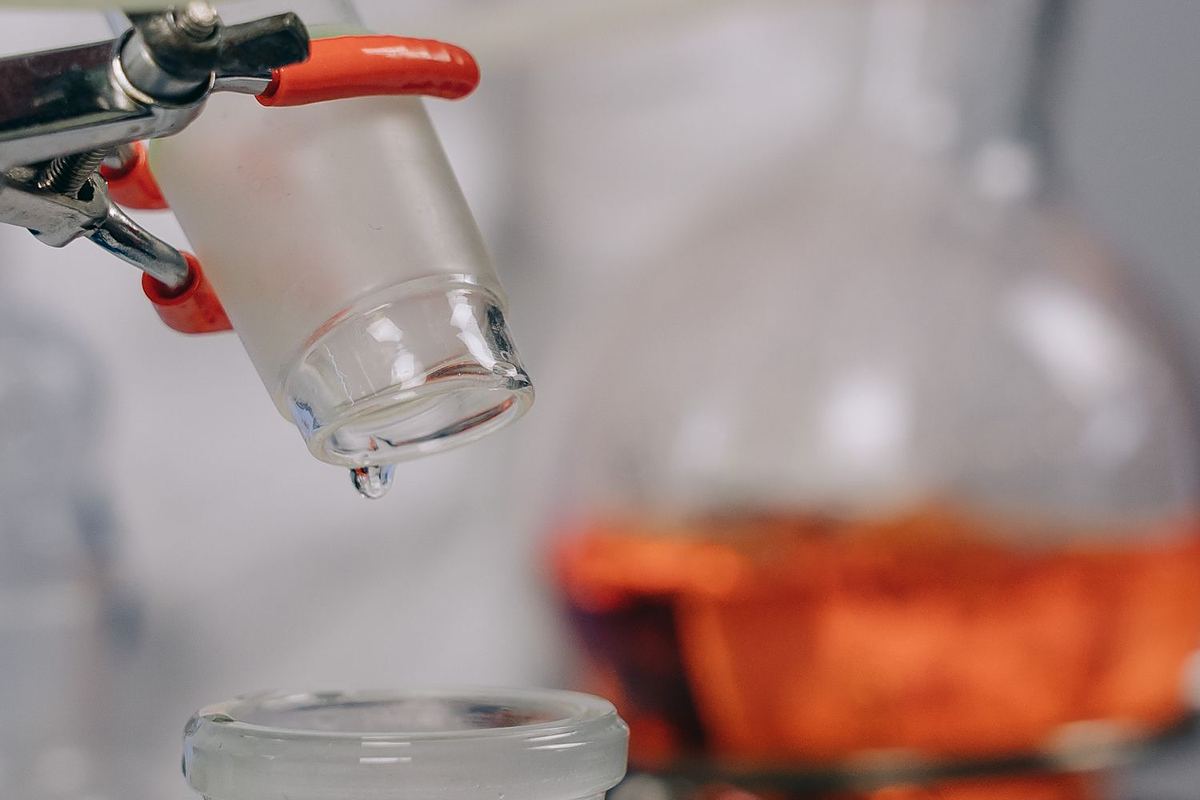
Making Cuts: Heads, Hearts & Tails
A distillation run is not one product — it is a stream that changes character from the first drip to the last. Making cuts means dividing that stream into fractions, keeping the good middle, and deciding what to discard and what to recycle. It is the single skill that separates a smooth spirit from a rough one, and it is learned with your nose and palate, not with a thermometer alone.
Foreshots: a quick recap
The very first liquid off the still — the foreshots — concentrates the lightest, most volatile compounds in the wash, including methanol, acetone, and acetaldehyde. Foreshots are always discarded, with no exceptions, and never tasted. Our foreshots guide covers the volumes to discard per batch size and the chemistry in full; everything below assumes the foreshots are already gone.
Heads: the sharp transition
After the foreshots, the distillate enters the heads fraction. Heads are still dominated by light, sharp-smelling compounds — mostly ethyl acetate and residual acetaldehyde, with diminishing traces of the lighter material behind them — mixed with a growing share of ethanol. They come off at high strength, typically around 80–96% ABV on a spirit run, and they smell solvent-like: nail polish remover is the comparison every distiller reaches for, and it is accurate. On the tongue, heads bite. They sting, taste chemical, and leave a harsh burn that has nothing to do with alcohol strength.
Heads are commonly blamed for hangovers, and whether or not that reputation is fully deserved, nobody wants them in the bottle. The beginner's most common mistake is cutting into the hearts too early, while the heads character is still present. The transition is gradual on a pot still — the sharpness fades jar by jar rather than switching off — so patience here pays directly in smoothness. Heads are not poison in the way foreshots are, and they are not wasted: they go into the feints jar for redistilling, as explained below.
Hearts: the keepable middle
Hearts are the reason you ran the still. This is the fraction where the spirit is clean, smooth, and true to the wash — the grain, fruit, or molasses character you actually want, carried in ethanol with the least interference from anything else. On a spirit run, hearts typically come off in roughly the 62–80% ABV range, though the numbers shift with still design and wash strength and should never be treated as hard boundaries.
You will know you are in the hearts because the smell changes: the solvent edge is gone, replaced by the clean aroma of the spirit itself — sweet, grainy, fruity, or simply neutral depending on what you fermented. Tasted (diluted with a little clean water), hearts are smooth, with no chemical bite and no oily weight. This is the fraction that gets aged, diluted, and bottled. Everything before and after exists to be separated from it.
Tails: the heavy end
As the run continues, the alcohol in the boiler runs down, the vapour temperature climbs, and heavier compounds begin to dominate the output. These are the tails: fusel oils and higher alcohols such as 1-propanol (boiling point 97 °C), along with an increasing share of water. Output strength falls through roughly 20–62% ABV as the tails progress, and the character changes unmistakably.
Tails smell and taste oily, heavy, and stale — wet cardboard, damp grain, old cooking oil, and a musty, almost soapy quality are the usual descriptions. The spirit may turn slightly cloudy as fusel oils come over, and a drop rubbed between the fingers feels slick rather than evaporating cleanly. A little tails character can add body and complexity to a whiskey or rum, which is why some distillers deliberately keep a small amount of early tails. Too much, and the spirit tastes muddy and tired, and no amount of aging fully fixes it.
Feints: what to do with the rest
Heads and tails are collectively called feints, and they are far from waste. Feints still contain a great deal of ethanol, along with flavour compounds that are unpleasant at full strength but valuable in small doses. The standard practice is to collect heads and tails into a feints container and add them to the next run — either into the next stripping run, or diluted into the next spirit run's charge — where the good ethanol is recovered and the fractions are separated again, more cleanly.
Two rules apply. First, foreshots never go into the feints jar: they are discarded every time, and adding them to a future run just moves the poison around. Second, feints accumulate character with each recycle. A little feints addition deepens flavour; too much, run after run, loads the spirit with heavy, stale notes. Many distillers keep the feints addition modest — a portion of the charge rather than the whole of it — and occasionally run a dedicated feints-only spirit run to recover the alcohol cleanly.
Sensory cues: smell, taste, temperature, ABV
Cuts are ultimately made by taste and smell, not by instruments — the HomeDistiller wiki's guide to cuts says so plainly, and every experienced distiller agrees. Instruments help, but they are a crutch, not a replacement. Here is how the four cues work together:
- Smell. Your best tool. Put a few drops on the back of your hand, let the alcohol evaporate for a moment, and sniff what remains. Heads smell solvent-like and sharp; hearts smell clean and true to the wash; tails smell oily, musty, and stale. Smell every jar — the change from one to the next is the whole story of the run.
- Taste. Dilute a small sample with clean water before tasting — high-proof spirit numbs the palate and hides detail. Heads bite and sting; hearts are smooth; tails are oily and bitter. Taste sparingly and spit if you are sampling many jars.
- Temperature. A thermometer in the vapour path at the top of the column shows what is coming over: the temperature rises steadily through the run as lighter compounds give way to heavier ones. Ethanol boils at 78.4 °C at sea level, so a vapour temperature climbing well past that point signals the tails are arriving. A thermometer in the boiler is less useful for cuts.
- ABV. The output strength falls steadily from the first jar to the last. A proofing parrot — a small device holding an alcoholmeter in the output stream — gives a live reading, or you can test each jar after collection. Note that vapour temperature and ABV tell you the same information in different forms: they are directly related by physics, so if you know one you can predict the other. Neither, on its own, tells you where to cut — your nose does that.
Run slowly. A gentle heat-up and a steady, unhurried output keep the fractions cleaner and the transitions easier to read. Running hard smears the fractions together and makes good cuts nearly impossible.
The numbered-jar method
The single best habit a new distiller can adopt is collecting the spirit run in many small, numbered jars instead of one big vessel. Use jars of roughly 250–500 mL, number them in run order, and note the time, vapour temperature, and ABV of each. When the run is over, cover the jars loosely with coffee filters or cheesecloth and leave them overnight. This lets the harshest volatiles evaporate and — just as importantly — lets you judge them with a fresh nose the next day, when your senses are no longer dulled by hours in a room full of alcohol vapour.
The next day, work through the jars in order. Smell each one, taste the promising ones diluted, and sort them into three groups: keep as hearts, set aside as feints, and discard (foreshots only — nothing else in the jar line should need discarding). You will find the boundaries are obvious in hindsight: the jars where the solvent smell fades, and the jars where the oily heaviness begins. Record where you cut. After a few runs on the same still with the same wash, the cut points become predictable, and you will know your equipment's habits.
Blending cuts back for flavour
Cutting is not only about removing the bad — it is also about choosing how much character to keep. A whiskey made from only the cleanest middle hearts can taste thin and one-dimensional. Many distillers blend a measured amount of late heads or early tails back into the hearts to add fruitiness, body, or complexity. Late heads can contribute bright, fruity esters; early tails can add grainy weight and mouthfeel. The key word is measured: add a little, taste, and stop before the sharpness or oiliness becomes noticeable. You can always add more; you cannot take it back out.
For neutral spirit the logic reverses: cut narrow, keep only the cleanest hearts, and let the feints carry everything else away for redistilling. The blending decision is part of what makes each distiller's spirit their own, and it is worth experimenting with small test blends before committing a whole batch.
Stripping runs vs spirit runs
Proper cuts are made on the spirit run, not the stripping run. On a stripping run — the fast first distillation of wash into low wines — the spirit is too dilute and the fractions too smeared for sensory judgement to mean much. The usual practice is simply to discard the foreshots and collect everything else as low wines. The careful work happens on the spirit run, when the low wines are redistilled at higher strength and the fractions separate into distinct, judgeable bands. A two-run process (stripping run, then spirit run) is the standard approach for pot stills, and it is what makes good cuts possible.
Sources
- HomeDistiller wiki, "Cuts and fractions" — cuts made by taste and smell, not ABV or temperature; vapour temperature and ABV carry the same information; rough fraction outlines for pot stills. homedistiller.org
- Still Brewin', "Making Cuts" — boiling-point table (acetone 56 °C, methanol 64 °C, ethyl acetate 77 °C, ethanol 78 °C, 1-propanol 97 °C, fusel oils 132 °C+); vapour thermometer placement; proofing parrot; foreshots guidance. stillbrewin.com
- DistilCalc, "How to Make Cuts When Distilling" — approximate ABV bands (heads ~80–96%, hearts ~62–80%, tails ~20–62%); stripping vs spirit runs; foreshots rule of 2.5 mL per litre of charge. distilcalc.com
- DIY Distilling, "How To Make Cuts When Distilling" — labelled collecting jars; covering jars with coffee filters or cheesecloth overnight to let harsh volatiles evaporate before judging. diydistilling.com