Moonshine Basics & History
Moonshine is the most storied spirit in American history — and one of the most misunderstood. It is not a single recipe, a single proof, or a single flavour. It is a way of making whiskey outside the law, born from taxes, perfected in mountain hollows, and carried into the modern day by both outlaws and licensed distillers. Here is what it is, where it came from, and what it has become.
What moonshine is
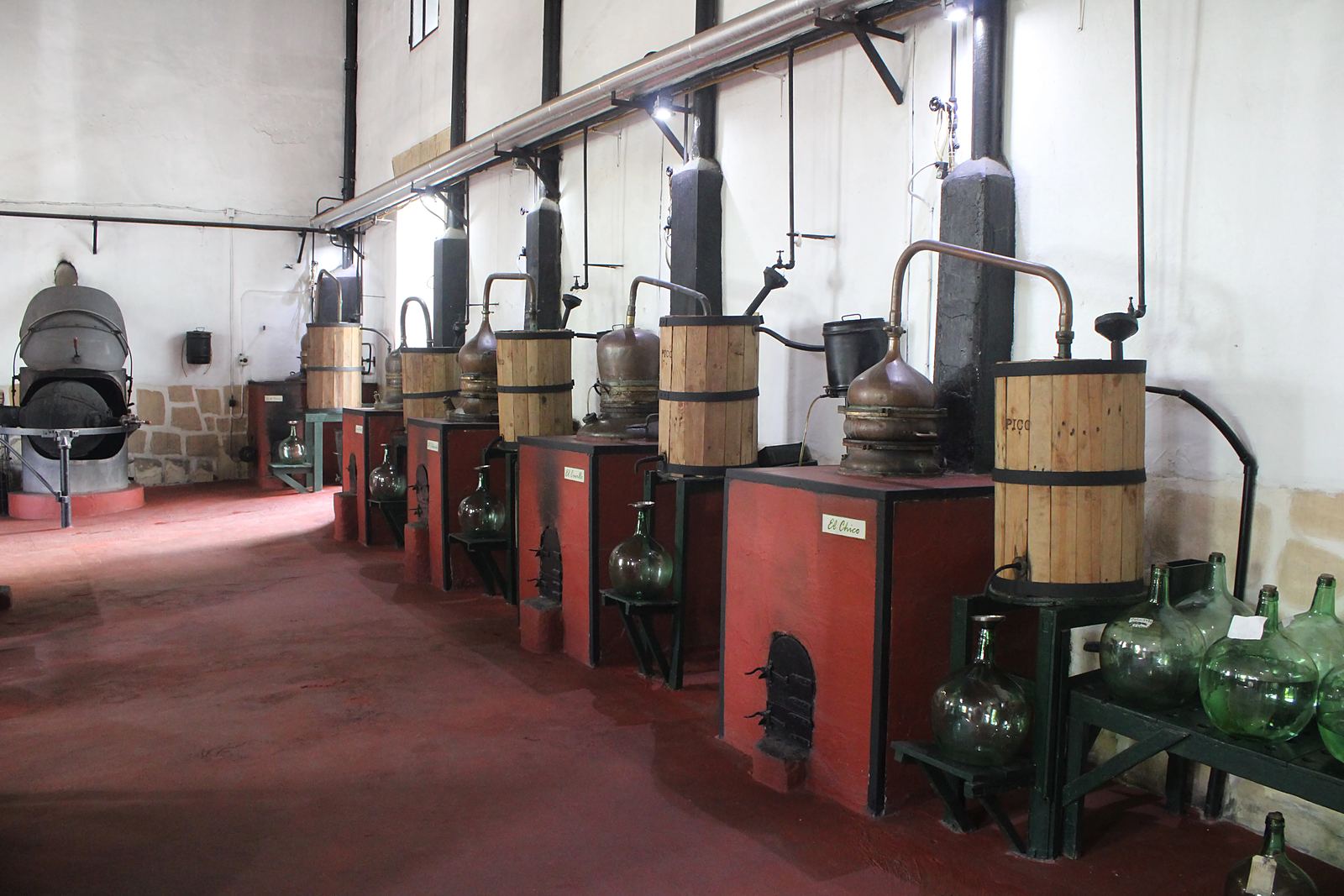
At its simplest, moonshine is clear, unaged whiskey — usually made from corn — distilled in a pot still and bottled without spending time in a barrel. It goes by many names: white lightning, white dog, corn liquor, rotgut, mountain dew. Because it never meets oak, it has no colour and none of the vanilla, caramel, and spice that aging adds. What it has instead is the raw character of its ingredients: sweet corn, grain, and a fiery strength that is often well above the 40% ABV of a bottled whiskey.
But the word has always meant more than a recipe. Traditionally, moonshine is defined by how it was made, not what it was made from: distilled in secret, without a licence, without paying tax, and usually at night. A licensed distillery can sell a product labelled “moonshine” today — and many do — but historically the word meant untaxed, unregulated, and illegal. That distinction matters, because it explains both the romance and the danger attached to the name.
The basic process has barely changed in centuries. Grain (most often corn, sometimes with rye, barley, or wheat) is cooked and mashed so its starches convert to sugar; yeast ferments the sugar into alcohol; the resulting wash is distilled, usually twice in a pot still, and the middle of the run — the hearts — is kept. Sugar washes, made from plain sugar and water instead of grain, are a simpler modern variation, but the classic moonshine mash is corn-based.
Where the name comes from
The word “moonshine” itself is old — it has been in use since the 15th century — but it only came to mean illicit liquor in England in the late 18th century. An early reference from 1785 describes liquor smuggled along the coasts of Kent and Sussex. The meaning is plain: this was liquor made and moved by moonlight, under cover of darkness, where the taxman could not see the smoke from the still or the wagons on the road.
The name travelled to America with the practice. In the mountain South, stills were hidden in hollows and coves, and the work was done at night for the same reason: a still's smoke and smell are hard to hide in daylight. The people who made it were moonshiners; the people who hauled it to market were bootleggers; and the federal agents who hunted them were revenuers.
The whiskey tax and the Whiskey Rebellion
American moonshining begins with a tax. In early 1791, the new federal government — needing revenue to pay off Revolutionary War debts — passed the first nationwide tax on a domestic product: an excise on distilled spirits, at the urging of Treasury Secretary Alexander Hamilton. The rate ran from six to eighteen cents per gallon, and small distillers often paid more than twice per gallon what large eastern producers paid. Every still had to be registered, and tax disputes were heard in federal courts — in Pennsylvania, that meant a trip to Philadelphia, some 300 miles from frontier Pittsburgh.
For farmers west of the Appalachian and Allegheny Mountains, the tax landed on their livelihood. Grain was bulky and hard to haul over mountain roads — a horse could carry only three or four bushels — but distilled into whiskey, the same horse could carry the product of twenty bushels of rye. Whiskey was not just a drink on the frontier; it was a cash crop and a form of currency. The tax fell hardest on the people least able to pay it, and resistance followed.
Protests broke out in 1792 and 1793, and the confrontation came to a head in the summer of 1794, when armed protesters attacked a federal tax collector's home and massed at Braddock's Field outside Pittsburgh. President Washington called up a militia of nearly 13,000 men, which marched into western Pennsylvania that October and ended the uprising without a major battle. The rebellion failed, but the pattern it set lasted for generations: small distillers in remote country, a federal tax they saw as unjust, and a habit of working out of sight. The whiskey tax itself was repealed in 1802, but by then the culture of untaxed distilling was firmly rooted — and it would resurface every time taxes on spirits rose again.
Prohibition: the golden age of the outlaw still
The temperance movement had been gathering force since the early 1800s, and in January 1919 its supporters achieved their great victory: the Eighteenth Amendment to the US Constitution was ratified, banning the manufacture, sale, and transportation of intoxicating liquors. The country went dry on January 17, 1920, under the enforcement law known as the Volstead Act. Possession and consumption were not themselves federal crimes, but making and selling alcohol were — and that gap created the largest black market in American history.
Prohibition was the making of the moonshiner. With legal distilleries shuttered, demand for spirits did not disappear; it went underground. Rural stills multiplied, and cities were supplied by bootleggers and speakeasies — by 1925, New York City alone was estimated to hold somewhere between 30,000 and 100,000 illicit drinking clubs. Organised crime moved in to control production and distribution at scale, and the quality of what was sold varied wildly. Some moonshine was excellent; some was cut with industrial alcohol, and the federal government's own programme of denaturing industrial alcohol — adding poisons to discourage diversion into drinking — is estimated to have killed around 10,000 people.
Enforcement proved impossible at the scale required, public opinion turned, and the experiment ended with the Twenty-first Amendment, ratified on December 5, 1933 — the only constitutional amendment ever passed to repeal another. Prohibition was over, but moonshining was not: the taxes that returned with legal alcohol kept untaxed distilling profitable, and in parts of Appalachia the trade continued for decades.
From bootlegging to NASCAR
The most unlikely legacy of moonshining is stock car racing. Moving illegal liquor from mountain stills to buyers required fast drivers in ordinary-looking cars — heavy-duty suspensions to protect the jars, tuned engines to outrun the revenuers, and manoeuvres like the bootleg turn, a controlled skid to reverse direction at speed. When the runners were not hauling, they raced each other for bragging rights.
After Prohibition ended and demand for bootlegged liquor faded, those drivers and their cars had nowhere to go but organised racing. On December 14, 1947, Bill France convened a meeting of drivers, car owners, and mechanics to standardise the rules — and NASCAR, the National Association for Stock Car Auto Racing, was born. France had used seed money from Georgia moonshiner Raymond Parks to found the organisation, and early NASCAR legend Junior Johnson had himself spent 11 months in federal prison for running an illegal still. The sport's roots in the whiskey trade are not a colourful footnote; they are the reason the sport exists.
Moonshine vs commercial whiskey
The difference between traditional moonshine and a bottle of commercial whiskey comes down to three things: aging, regulation, and consistency.
- Aging. Commercial whiskey spends years in oak barrels, picking up colour and flavour and shedding harshness. Moonshine is bottled clear and unaged — what you taste is the grain, the yeast, and the skill of the distiller, with nothing to hide behind.
- Regulation. A licensed distillery works under strict rules: registered premises, inspected equipment, taxed output, and — for bourbon — a defined recipe of at least 51% corn, distillation at no more than 80% ABV, and aging in new charred oak. A moonshiner answers to no one, which is the point — and the risk.
- Consistency and safety. A commercial bottle is tested, proofed to a stated strength, and the same every time. Traditional moonshine varied from batch to batch and from maker to maker. A careful moonshiner made good spirit; a careless one could produce something contaminated with lead from soldered joints, methanol from a skipped foreshots cut, or worse.
Today, licensed distillers sell legal “moonshine” — unaged corn whiskey, usually flavoured or bottled at high proof — that captures the style without the outlaw part. It is real whiskey, legally made, and it is the only kind of moonshine you can buy in a store.
The modern hobby
Moonshining today is two different things. In the commercial world, it is a style: small craft distilleries making unaged whiskey, often with local grain, and selling it openly. In the hobby world, it is a craft practised by enthusiasts who ferment, distil, and age their own spirits — where the law allows it. That last point is the important one: in the United States, Canada, the UK, Australia, and most of the EU, distilling spirits at home without a licence remains illegal, even for personal use. New Zealand is the notable exception, where home distilling for personal consumption has been legal since 1996. See the Legality hub for the full picture before you start anything.
What has changed most is knowledge. The old moonshiner learned from family and neighbours, guarded his recipes, and worked by feel. Today's hobbyist has hydrometers, thermometers, published chemistry, and calculators — the tools to make good spirit safely and repeatably, and to understand exactly what is happening inside the still. The craft is the same. The guesswork is optional now.
Sources
- Encyclopaedia Britannica, “Moonshine” — the word's use for illicit liquor from the late 18th century; 1785 Kent and Sussex reference; NASCAR founding with Raymond Parks' seed money; Junior Johnson's prison sentence. britannica.com
- Alcohol and Tobacco Tax and Trade Bureau (TTB), “The Whiskey Rebellion” — the 1791 excise tax of six to eighteen cents per gallon; still registration; frontier grievances; the 300-mile journey to the Philadelphia federal court. ttb.gov
- World History Encyclopedia, “Whiskey Rebellion” — protests in 1792–1793; the Braddock's Field gathering; the 12,950-man militia march in October 1794. worldhistory.org
- Wikipedia, “Prohibition in the United States” — Eighteenth Amendment ratified January 16, 1919; Prohibition in force January 17, 1920; repeal December 5, 1933; speakeasy estimates; denatured-alcohol deaths. en.wikipedia.org
- Smithsonian Magazine, “How Moonshine Bootlegging Gave Rise to NASCAR” — night distilling and the origin of the name; runner cars and the bootleg turn; the December 14, 1947 meeting that founded NASCAR. smithsonianmag.com
- Smoky Valley Distillery, “Bourbon vs. Scotch” — bourbon's legal definition (27 CFR 5.143): at least 51% corn, distillation at 160 proof or less, barrel entry at 125 proof or less, new charred oak. smokyvalleydistillery.com