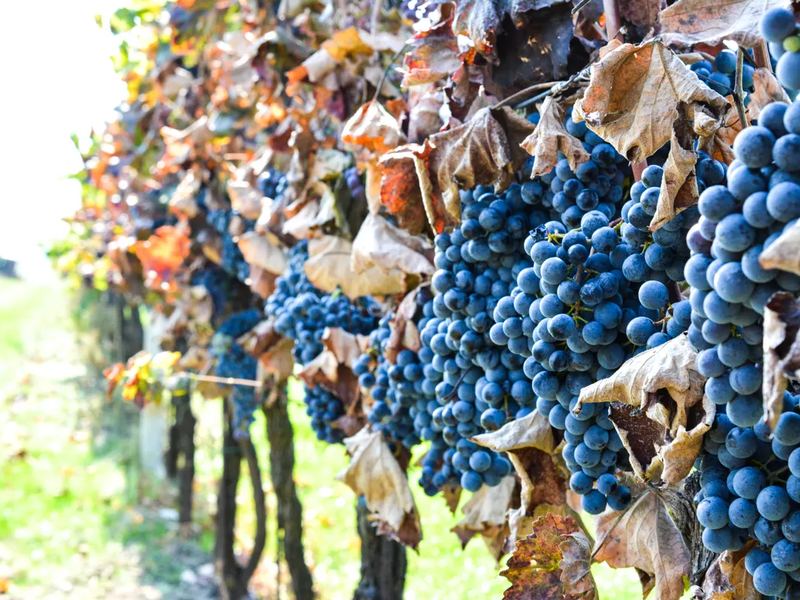
Why Only the Worst Wine Became Brandy
Brandy begins as wine — but in 1850s France, it almost never began as good wine. An American distilling manual of 1853, M. L. Byrn's The Complete Practical Distiller, opens its brandy chapter with a rule of economics rather than of craft: the still was where wine went when it could not be sold as wine. That one rule explains where brandy came from, which regions made the most of it, why the lees went into the still, and how spirits got their colour from the oak cask.
The rule that made brandy
Byrn states the rule flatly, and it is worth quoting in full, because everything in the 1850s brandy trade follows from it: "It is a general rule in France not to distil any wine that will bring a good price as wine; for in this state the profits upon them are much higher than when reduced to brandies" (Byrn, PDF p. 100). Brandy was not made from the best grapes. It was made from the grapes and wines that had failed at every better use — and France, Byrn says, was "almost overrun" with such small wines, which is why it made more brandy than any other country, even ones with warmer climates and better grapes.
The logic is simple arithmetic. A cask of wine sold as wine earned more than the same wine reduced to brandy. Distillation was the salvage trade: it recovered value from material that would otherwise have been poured away. Three streams fed the stills — poor grapes at vintage time, wine that had turned sour, and wine nobody would buy — and between them they supplied the French brandy trade without ever touching a bottle worth drinking.
The same salvage logic is older than Byrn's book. Brandy itself began as a logistics solution: in the 16th century, Dutch merchants trading along France's Atlantic coast distilled the thin, acidic white wines grown above Cognac into brandewijn — "burnt wine" — because the concentrated spirit was less bulky to ship north and kept better on the voyage. The word brandy is brandewijn worn down by English tongues.
What went into the still
The first stream was the poor grape. At vintage time, Byrn writes, "all those poor grapes that prove unfit for wine are usually first gathered, pressed, their juices fermented, and directly distilled." The point was partly housekeeping: distilling the poor grapes at once cleared them out of the way and "leaves their casks empty for the reception of better." The worst fruit was processed first, so that the good fruit had somewhere to go.
The second stream was the spoiled wine. "All the wines that turn sour or sharp are condemned to the still" (Byrn, PDF p. 100). A wine that had gone over to vinegar could not be sold as wine, but its alcohol was still there to be recovered. The still was the last resort for a cask that had gone wrong — and in an age before sulphur dosing and temperature-controlled cellars, a great many casks went wrong.
The third stream was the surplus: "all such as they can neither export nor consume at home, which amounts to a large quantity." Much of the wine laid in for French households was so poor, Byrn says, that it would not keep from one season to the next. A wine that would not survive the year had two fates — the drain, or the still. The still at least paid for the firewood.
Notice what is missing from all three streams: any wine anyone wanted to drink. "The weakest and lowest flavoured wines only are drawn for their spirit, or such as prove absolutely unfit for other use" (Byrn, PDF p. 100).
A map of yield and quality
Byrn then draws a map of France by what its wines yielded in the still. The wines of Languedoc and Provence "afford a great deal of brandy by distillation," and those of Orléans and Blois "afford still more" (Byrn, PDF p. 99). The southern and Loire wines were the workhorses: abundant, cheap, and generous in the still.
The best brandy, though, came from Cognac — whose wines, Byrn notes, were "among those that are least drunk in France." That last detail has echoed down the centuries. In 2022, only about 2.8 percent of the Cognac sold worldwide was sold in France itself; the rest was exported. The wine of the Charente was never much of a table wine, and the spirit made from it was, from the start, a product for other people's markets.
At the other end of the map sat the fine wines. Burgundy and Champagne, "though of a very fine flavour, yield but very little in distillation" — and nobody was going to sacrifice a cask of Burgundy to the still when it could be sold for far more as wine. The great sweet wines — from Spain, the Canaries, Alicante, Cyprus, Tokay, Graves and Hungary — yielded little brandy and "would cost the distiller considerably more than he could sell it for," and what little spirit they gave often turned aromatic with age, "not agreeable to all palates" (Byrn, PDF pp. 99–100).
The map's lesson is that "best for brandy" and "best for drinking" were nearly opposite qualities: the wines that distilled best were the thin, sharp, abundant ones nobody wanted in a glass — a pattern that has never really gone away.
The lees went in too
There was one more thing the French put in the still, and it shows how deliberate the craft behind the salvage trade really was. The French process of distilling brandy, Byrn writes, differed from ordinary practice in one particular: "the French only observe, more particularly, to throw a little of the natural lees into the still along with the wine, because they find this gives their spirit the flavour for which it is so admired" (Byrn, PDF p. 99). Lees — the sediment of dead yeast cells and grape solids left after fermentation — went into the still on purpose, for flavour.
That practice has survived intact. Cognac distillers still choose whether to distil on the lees — sur lie — and it is one of the biggest flavour decisions in making Cognac; Rémy Martin, for example, distils with the lees for added richness. It gives a rounder, richer, more characteristic spirit, but it is the harder way to run a still: the solids sink, and if they scorch on the heated bottom they taint the spirit with a burnt, harsh flavour.
Byrn's book even contains the first real chemistry of why lees are a double-edged ingredient. Quoting experiments by M. Aubergier, published in the Annales de Chimie et de Physique, he reports that the lees carry a powerfully flavoured oil, concentrated in the skins of the fruit: "The oil is so penetrating and so acrid that one drop of it is sufficient to infect 100 litres of the best brandy" (Byrn, PDF p. 187). The same material that gives brandy its admired flavour can ruin it in excess — a little lees was a flavouring decision, and getting the amount wrong was a fault.
Byrn also records a flavour principle that is still sound: when the distiller wants the spirit to carry as much of the flavour of the fruit and the wine as possible, he "should not distil it at a stronger degree than is required for consumption" (Byrn, PDF pp. 173–174). Over-rectifying strips the character out. The 1850s brandy makers, working with the worst wine in France, understood that the point of the still was to concentrate flavour, not to erase it. See the brandy guide for how those choices work in modern practice.
The colour came from the cask
Brandy comes off the still colourless: every drop of eau-de-vie that leaves a Cognac still today is a clear spirit of about 70% alcohol, and the amber colour of a finished Cognac comes entirely from its years in oak. In 1853, that fact was still a fresh observation — and Byrn records the moment the trade grasped it: "The art of colouring spirits owes its rise to observations on French brandies, and being found to have been derived from the oak of the cask, it is no difficulty to imitate it to perfection" (Byrn, PDF p. 101).
That one observation founded a whole art. Once distillers understood that brandy colour came from oak, they could imitate it — and Byrn lists the imitations in use: treacle and burnt sugar were the most practical colouring "found by experience," and oak-bark shavings steeped in spirit made "a dilute tincture of oak" (Byrn, PDF p. 150). The honest version and the shortcut were born together. Real colour takes years in a cask; burnt sugar takes an afternoon. The temptation has never left the trade: caramel colouring (E150a) is still permitted in Cognac today, alongside oak infusion, to even out colour between batches.
The real thing is worth the wait: oak gives up tannins, vanillin, and colour compounds to the spirit over months and years, while evaporation and oxidation round the flavour. The oak aging guide covers how that extraction works and how to manage it at home, and Aging & Storing covers what happens — and what does not happen — once the spirit leaves the wood.
One caution is worth stating plainly: Byrn also records that cider spirit and crab-apple spirit could be made to resemble the fine, thin brandies of France. That was imitation, and the counterfeit brandy trade of the 1850s — cheap spirit dressed up and sold as French brandy — was fraud, not craft.
Where Byrn got it wrong
Not everything in the 1853 manual holds up. Byrn writes that brandy kept in vessels "the pores of which will not admit of any transmission of the liquor (as glass, for instance,) will improve, instead of getting worse" (Byrn, PDF p. 101). It will not.
Modern understanding is clear: a distilled spirit stops maturing the moment it leaves the cask. Glass is inert — it adds nothing, takes nothing away, and the high alcohol content acts as a preservative that largely halts further chemical change. A bottle of brandy keeps; it does not improve. The age on a label counts time in the barrel, never time on the shelf, and a badly stored bottle can only get worse. Byrn was right about the oak and wrong about the glass, and the two claims sit on facing pages of the same chapter — a good reminder that a source can be authoritative and mistaken at once.
The same logic, still running
The most remarkable thing about Byrn's rule is that it is still running, in plain sight, 170 years later — only now the worst wine is grown on purpose.
Modern Cognac is made from wine that is, by design, barely wine at all: the base wine is made almost entirely from Ugni Blanc, a grape that produces a thin, dry, sharply acidic white of around 7–9% alcohol, described as "virtually undrinkable" as a table wine — and excellent for distillation. The Cognac rules forbid adding sugar or sulphites during fermentation, and the wine must be distilled within months of the harvest. Nobody in the Charente grows Ugni Blanc hoping to bottle a fine white; the whole vineyard exists to feed the still.
At the other end of the scale, the surplus stream still flows. The European Union spent decades wrestling with a "wine lake" — overproduction of wine nobody wanted to buy — and its recurring answer was the 1850s answer at continental scale: distil it. Under "crisis distillation" programmes, surplus wine was bought with public money and distilled into industrial alcohol; in August 2023 alone, France and the EU set aside €200 million to turn surplus wine into industrial alcohol, with further millions to pull up vineyards in Bordeaux. In the mid-2000s, Europe produced some 1.7 billion more bottles of wine than it sold, year after year. The farmer clearing poor grapes to free his casks, and a government spending €200 million to drain a wine lake, are doing the same thing: the still is where wine goes when it cannot be sold as wine.
The home distiller knows the same logic at kitchen scale. A batch of wine that did not turn out, a ferment that went too far, a glut of fruit with nowhere to go — the still recovers the alcohol and the flavour from material that would otherwise be wasted. That is the brandy guide's whole premise: distillation as salvage, practised deliberately and well. The difference between 1853 and today is not the economics; it is that we now understand the chemistry behind the craft — the lees, the oak, the cuts — and can choose, rather than guess, what goes into the still.
Byrn's rule, read as a modern distiller would read it, is not really about bad wine. It is about refusing to waste good alcohol: the worst wine in France became the world's most celebrated brandy because the distillers knew exactly what to do with it.
Sources
- Byrn, M. L., The Complete Practical Distiller (Philadelphia: Henry Carey Baird, 1853; 1868 printing) — brandy chapters, PDF pp. 99–101 (lees in the still, regional yields, the general rule, sour wine "condemned to the still", colour from the oak cask, brandy in glass); colouring of spirits, PDF p. 150; flavour principle, PDF pp. 173–174; Aubergier's lees-oil experiments, PDF pp. 184–187. Public domain.
- Wikipedia, "Cognac" — base wine "virtually undrinkable", about 7–8% alcohol, no added sugar or sulphur; eau-de-vie a colourless spirit of about 70% alcohol; aging at least two years in French oak. en.wikipedia.org
- Cognac.com, "How Is Cognac Made?" — Ugni Blanc nearly 98% of vines planted; wine of about 9% ABV, 7–12% at distillation; "the wine is not meant for drinking." cognac.com
- Rémy Martin, "Cognac vs Brandy: What is the Difference?" — Cognac can be distilled with or without the lees; Rémy Martin distils with the lees for added richness. remymartin.com
- Barts Academy, "Cognac" — distilling on the lees adds a rich and powerful flavour, but burnt solids give a burnt, harsh spirit. bartsacademy.nl
- VinePair, "The Cognac Conundrum" — 97.2% of Cognac exported in 2022 (BNIC figures); Dutch merchants distilled acidic Charente wines into brandewijn as a less bulky, more stable cargo. vinepair.com
- Wikipedia, "Wine lake" — EU overproduction and crisis distillation; €200 million set aside in August 2023 to turn surplus French wine into industrial alcohol; 1.7 billion more bottles produced than sold in the mid-2000s. en.wikipedia.org
- VinePair, "Ask a Beverage Pro: Why Do Wine and Beer Age in Bottles, but Spirits Don't?" — spirits' higher alcohol acts as a preservative and largely halts further change once bottled. vinepair.com
- Flight Wine Bar, "What Is Cognac Made From (2026 Guide)" — caramel (E150a) and boisé (oak infusion) permitted for colour and roundness consistency. flightwinebar.com